
https://www.kulentuur.be/ateamuseum/telefoon_belle_epoque/index.htm Until 1907, there was a manually operated telephone exchange in Antwerp on the Melkmarkt, in a building above a shop. That was until it caught fire in October 1907. I have written an article about it entitled ‘Telephoning during the Belle Époque’.
Anecdotes
Anecdotes & testimonies
Memories, stories and details shared by those who knew the RTT.
Do you have an anecdote to share?
A memory from the job, a story from a worksite, the name of a forgotten colleague: every testimony adds to the memory of the RTT, Belgacom and Proximus.
+ Submit an anecdote
Do you have an anecdote to share?
A memory from the job, a story from a worksite, the name of a forgotten colleague: every testimony adds to the memory of the RTT, Belgacom and Proximus.
7 anecdote(s)
I would like to know what the purpose was of the telegraph masts that were erected (in towns?) around the 19th century. These were masts of a fairly limited height, around 15 metres. There are no overhead cables visible. Nor are there any antennas. I am referring to the article https://www.vrt.be/vrtnws/nl/2024/03/06/mysterie-van-opgegraven-massief-blok-in-sint-niklaas-opgehelderd/, where the foundations were excavated a good two years ago. There was also one in Vorst, near the Albert metro station. That photo is somewhere in a public archive, but I can’t remember where. At the bottom of the article, you can see a drawing of the top, which I believe served as a lightning conductor.
Replies (1)
These are distribution poles for telephone networks in towns and cities. Originally, telephone wiring was carried via overhead lines and what are known in French as ‘chevalets’, a ‘distribution box’ mounted on the roof. From around 1900, a cable was laid underground from the urban telephone exchange to the neighbourhoods where telephone wiring was required. In the neighbourhoods, the wiring then ran above ground via distribution poles 20 to 30 metres above the ground. From there, two wires were run to the subscriber. On postcards, these subscriber wires are not visible, as they are very thin and the resolution of the postcards is too low to show them. I have come across this type of wiring in Belgium, the Netherlands and Spain. As far as I am aware, not in any other countries. I have described this in my book on the history of telephony in Belgium, in the chapter ‘Evolution of Wiring’, on page 212 and following. Information about the book: https://www.kulentuur.be/telefoniegeschiedenis/index.htm I have also published an article on this subject in English: https://www.kulentuur.be/ateamuseum/vrienden_atea_museum/publicaties/20220301_Telephony_Wiring_old_postcards.pdf (for Belgium and the Netherlands) https://www.kulentuur.be/ateamuseum/vrienden_atea_museum/publicaties/20220800_TCI_telephone-wiring-spain.pdf (for Spain) I also have a collection of postcards from all over Belgium featuring aerial lines, chevalets and distribution poles. This system of chevalets and distribution poles was mainly installed between 1900 and 1930. I have also come across postcards from the 1950s showing that distribution poles were still in use. As an example, here is a picture of the distribution pole at the town hall in Borgerhout (Borgerhout is now a district of the city of Antwerp).
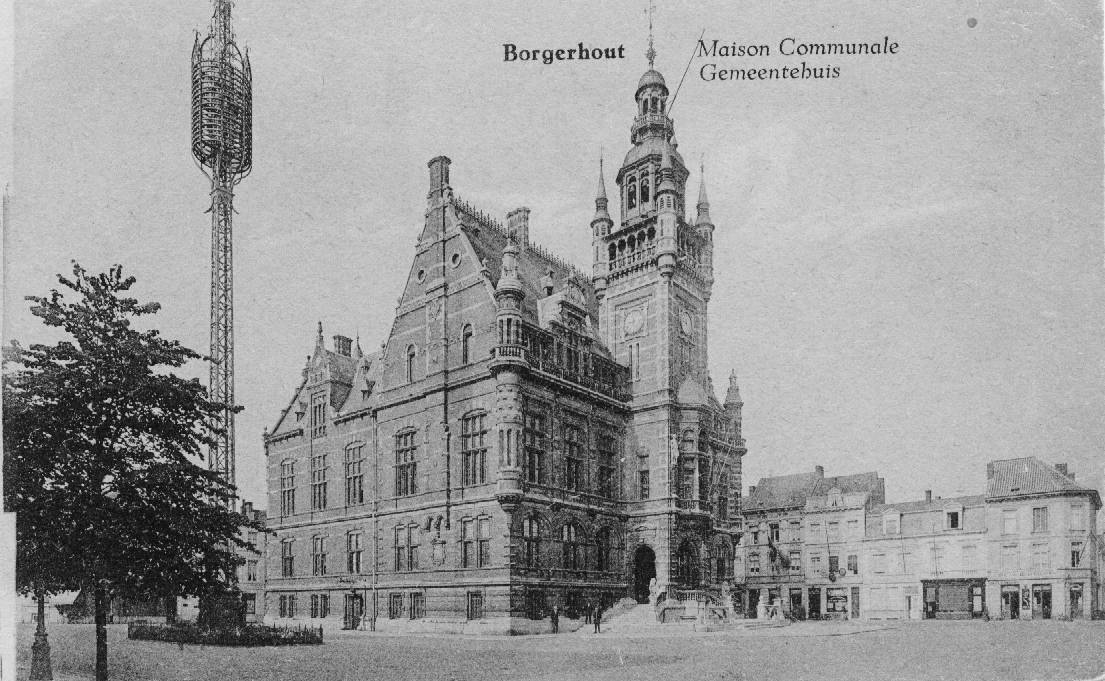
by Jan Verhelst
↩ Reply
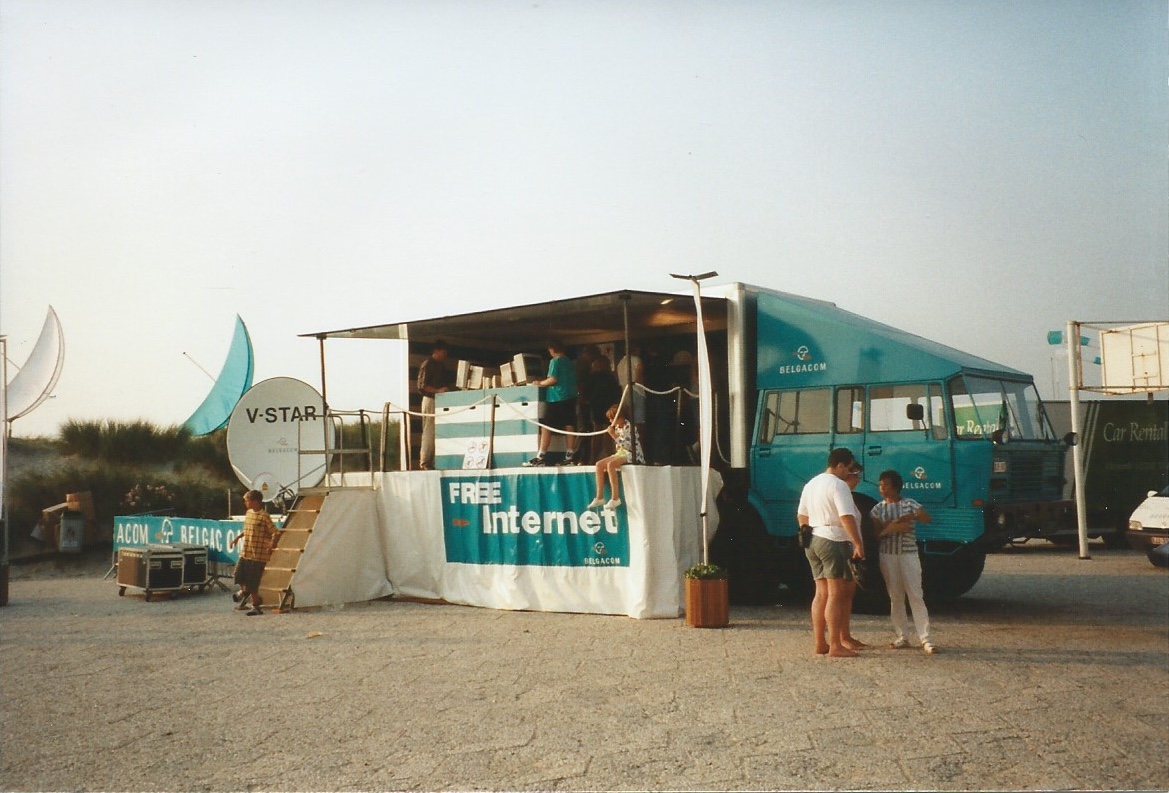
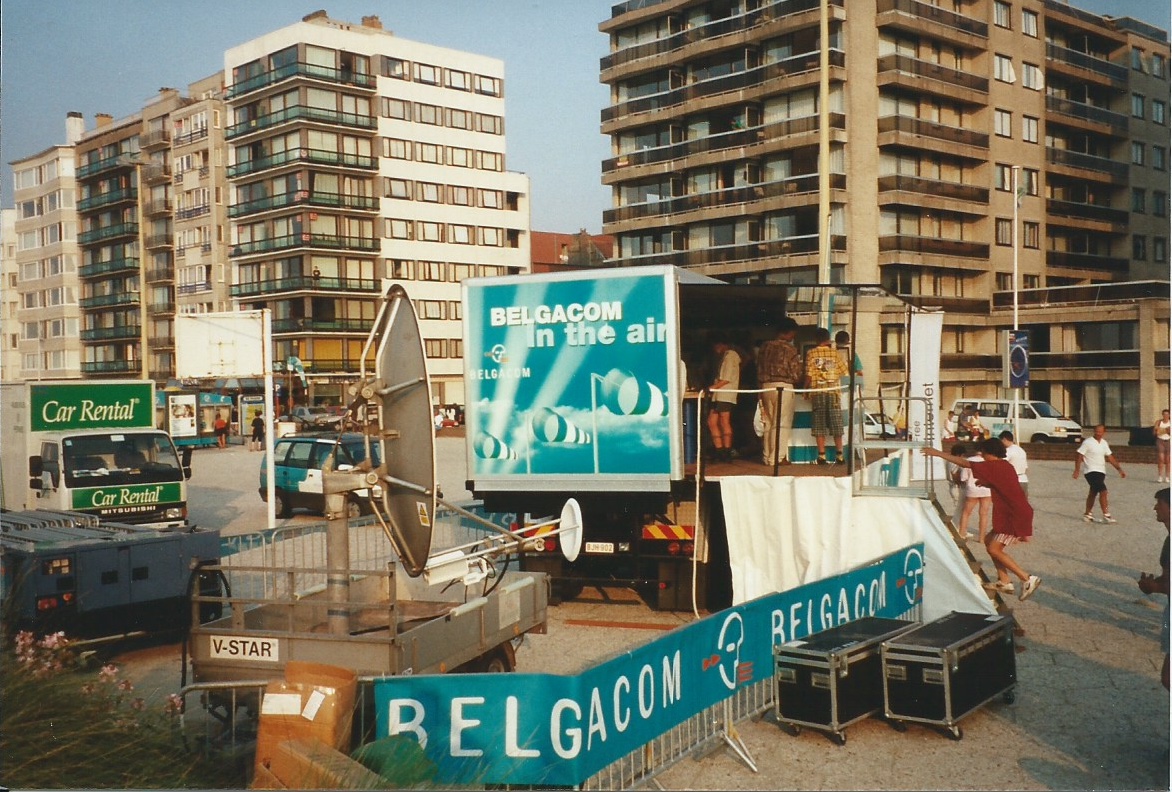
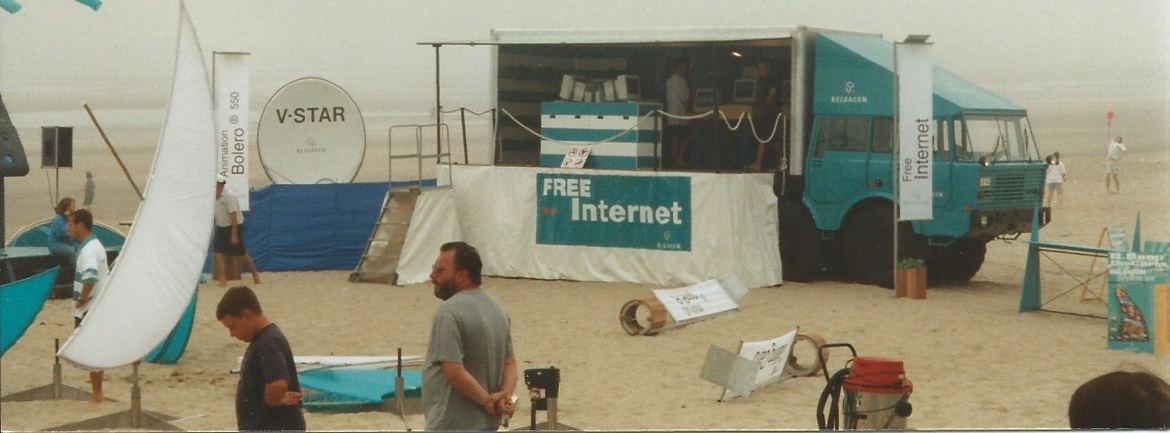
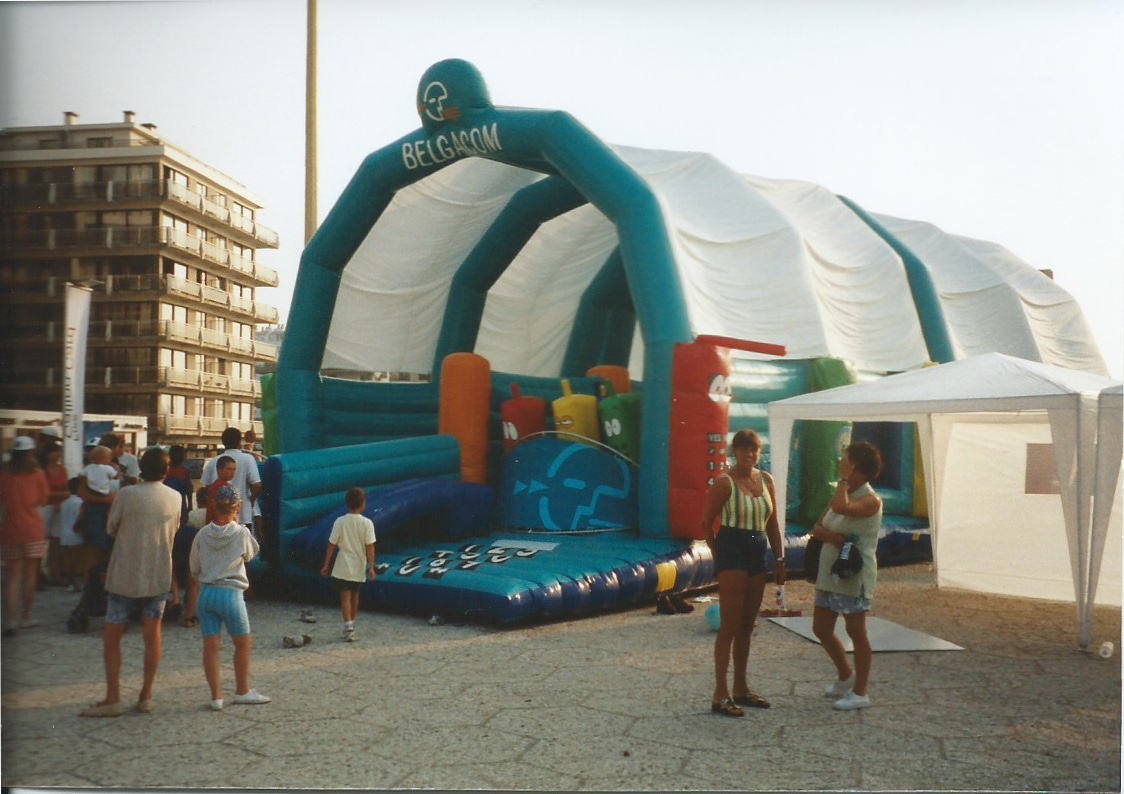
Summer 1997: Surfing by the Sea
↩ Reply
July 1968 Like many children whose dad or mom worked at the R.T.T., I, too, spent a month there on vacation when I was 7 years old. While we were playing, another child pulled my glasses off and threw them on the ground.I couldn’t see anything anymore—everything was blurry—but very quickly a counselor was standing next to me. She took me by the arm, and we went inside. A little later, a man dressed in black and wearing a kepi came in. He was a driver for the R.T.T. Together with the counselor, we were driven to an ophthalmologist in Veurne. Later, we went to the optician’s, where I got new glasses with the correct lenses. The R.T.T. paid for everything. And my parents were notified by phone about what had happened.
↩ Reply
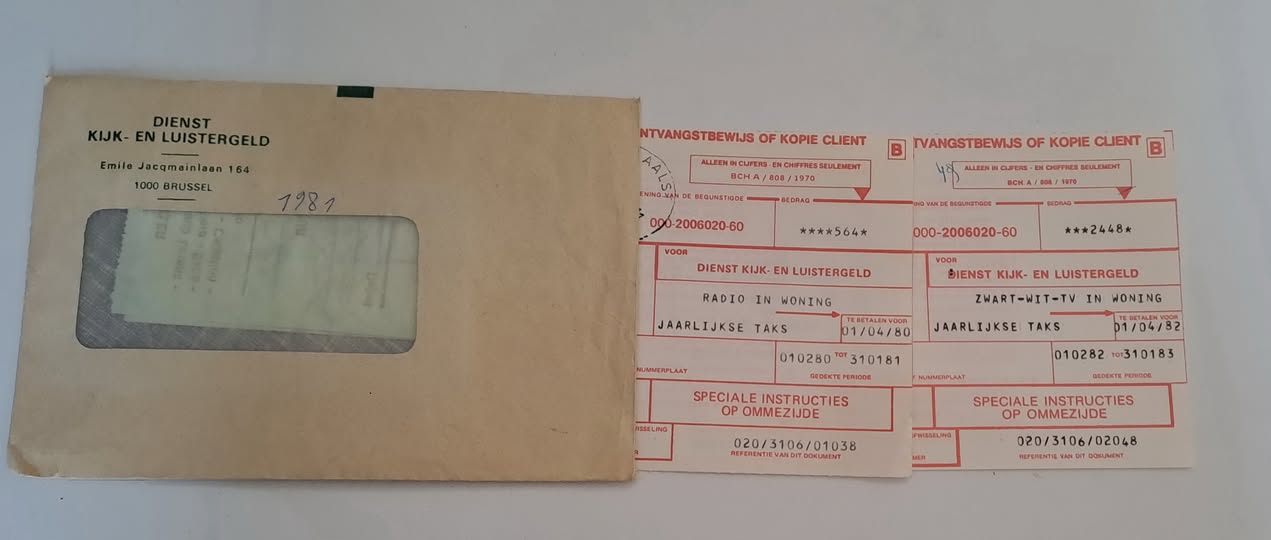
At the beginning of my career, I worked for a few months in the viewing and listening fees department.
↩ Reply
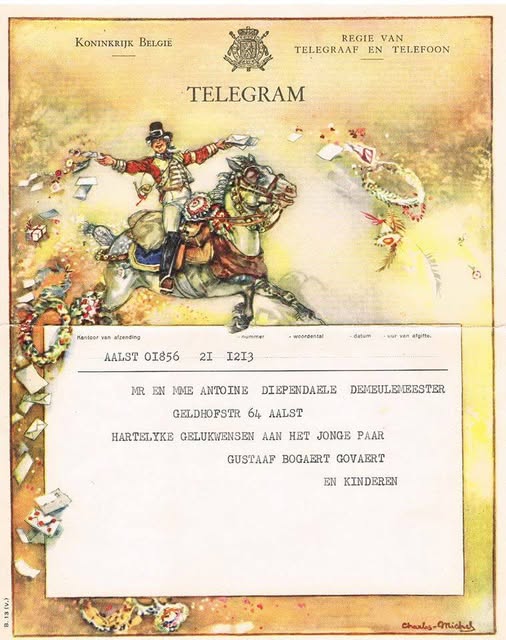
In 1957, the couple's parents received 52 luxury telegrams on their wedding day. Each telegram was prepared at the Aalst telegraph office.
↩ Reply
As a longtime employee of ATEA, I wrote not only several books about ATEA, but also one on the history of telecommunications in Belgium from its very beginnings (1877) through 1990. See https://www.kulentuur.be/telefoniegeschiedenis/index.htm