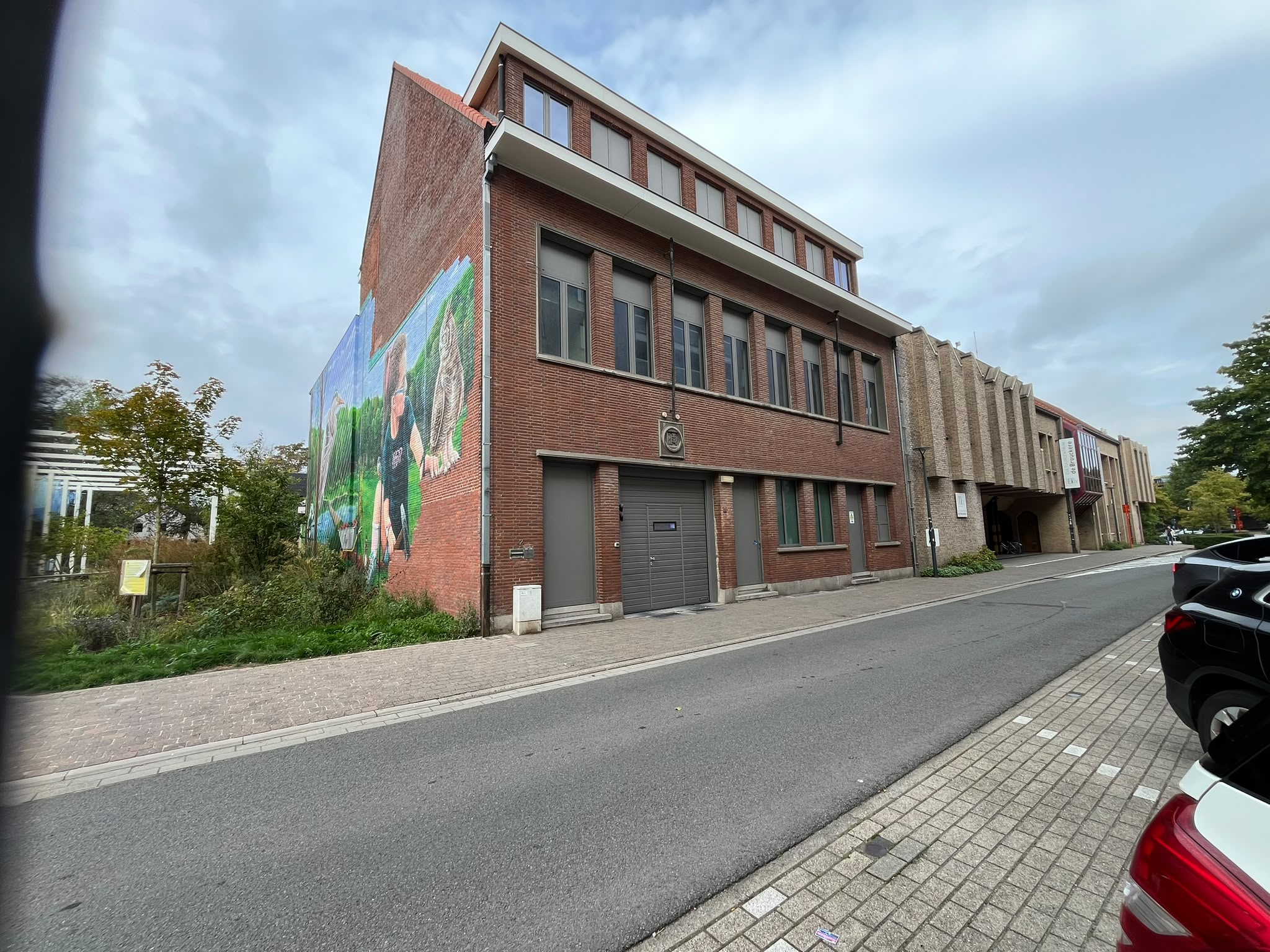
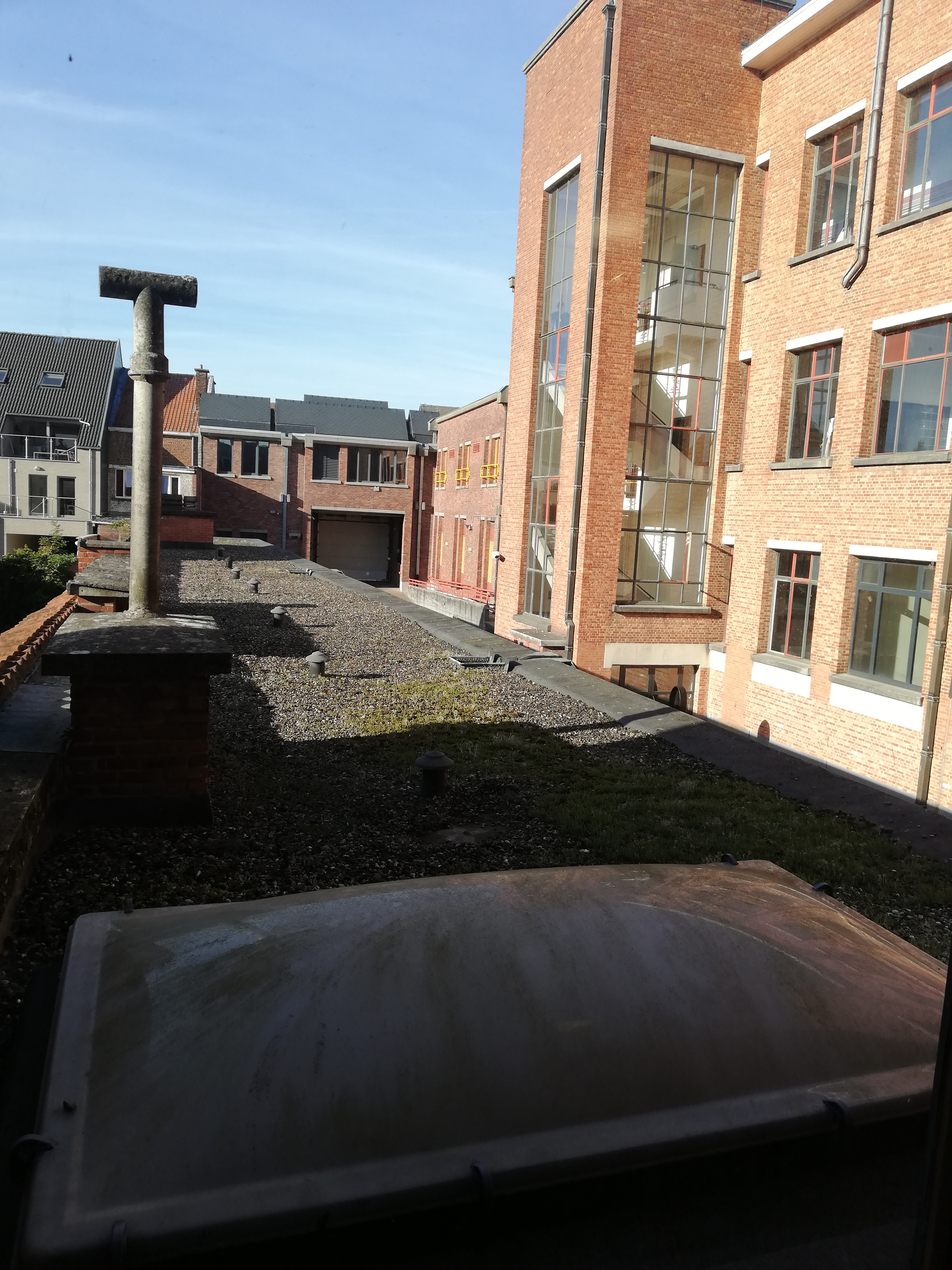
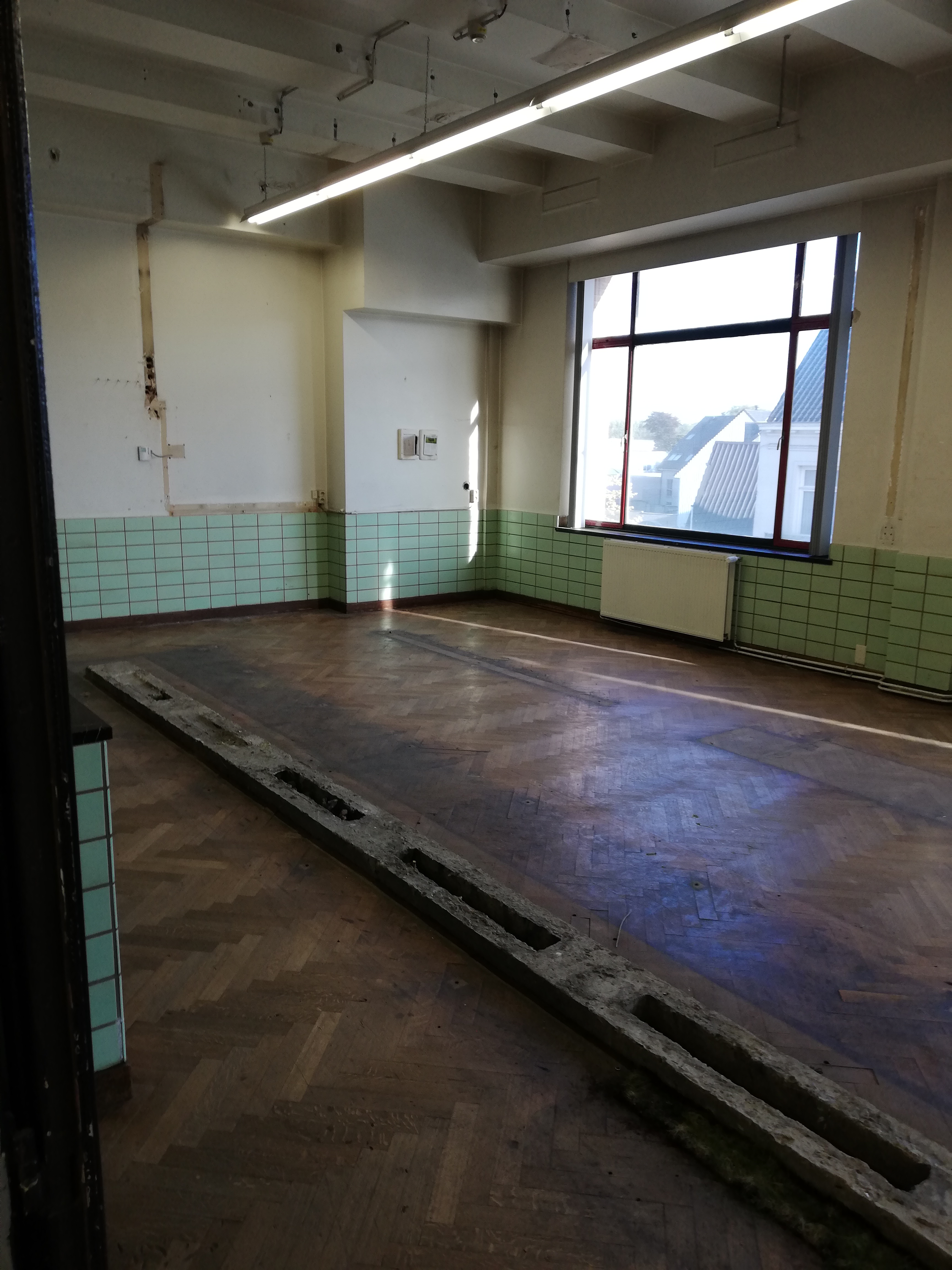
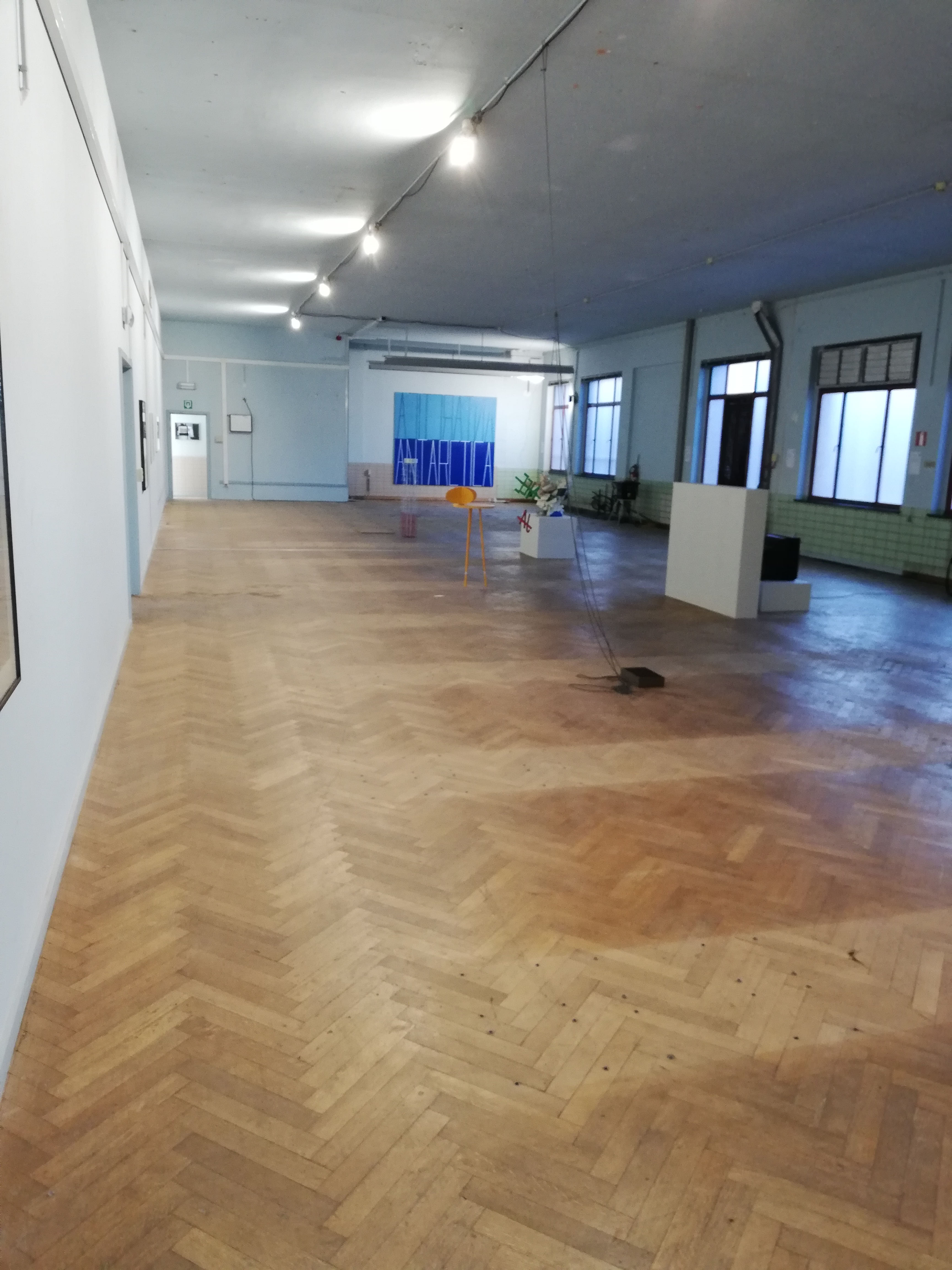
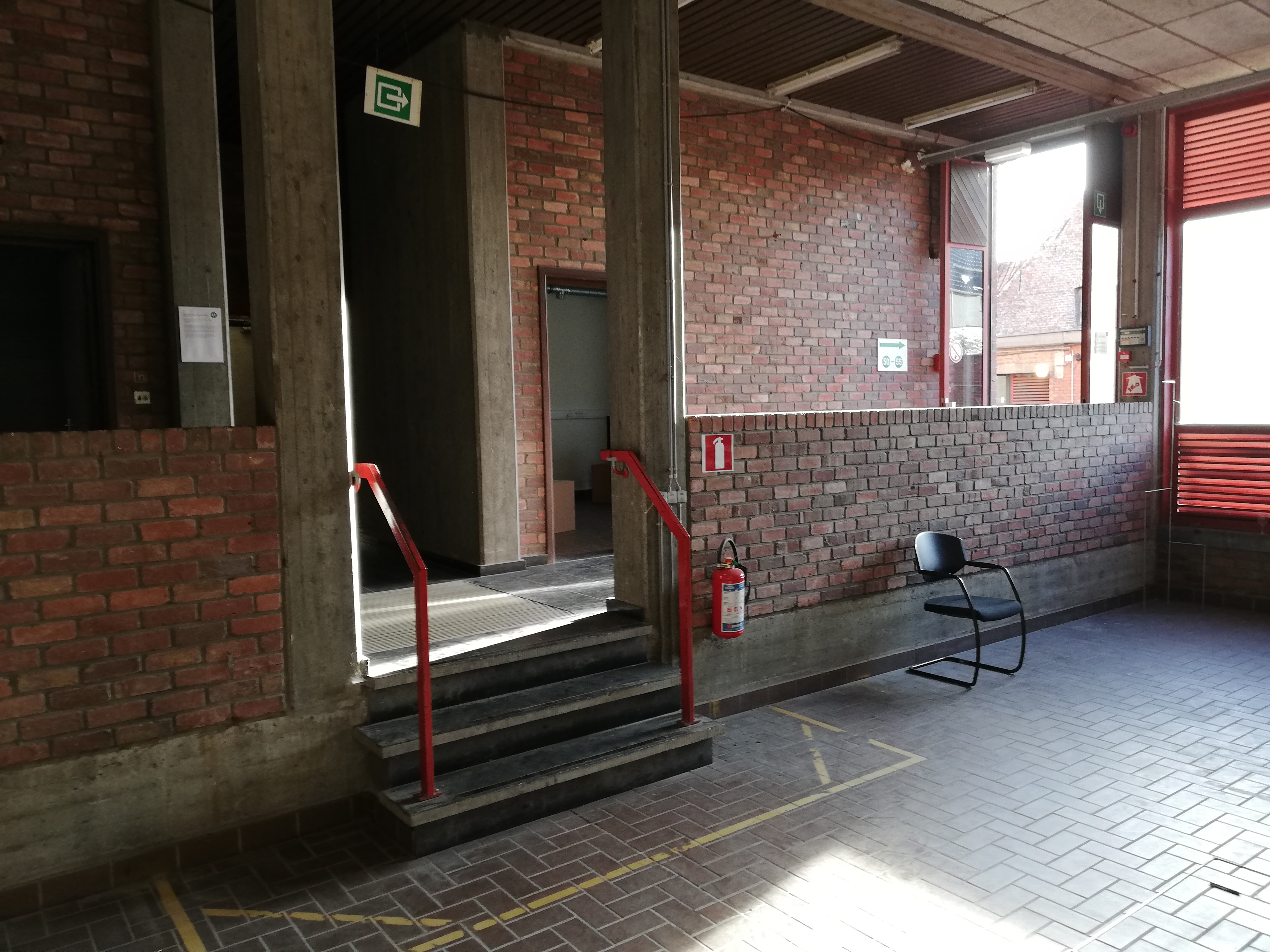
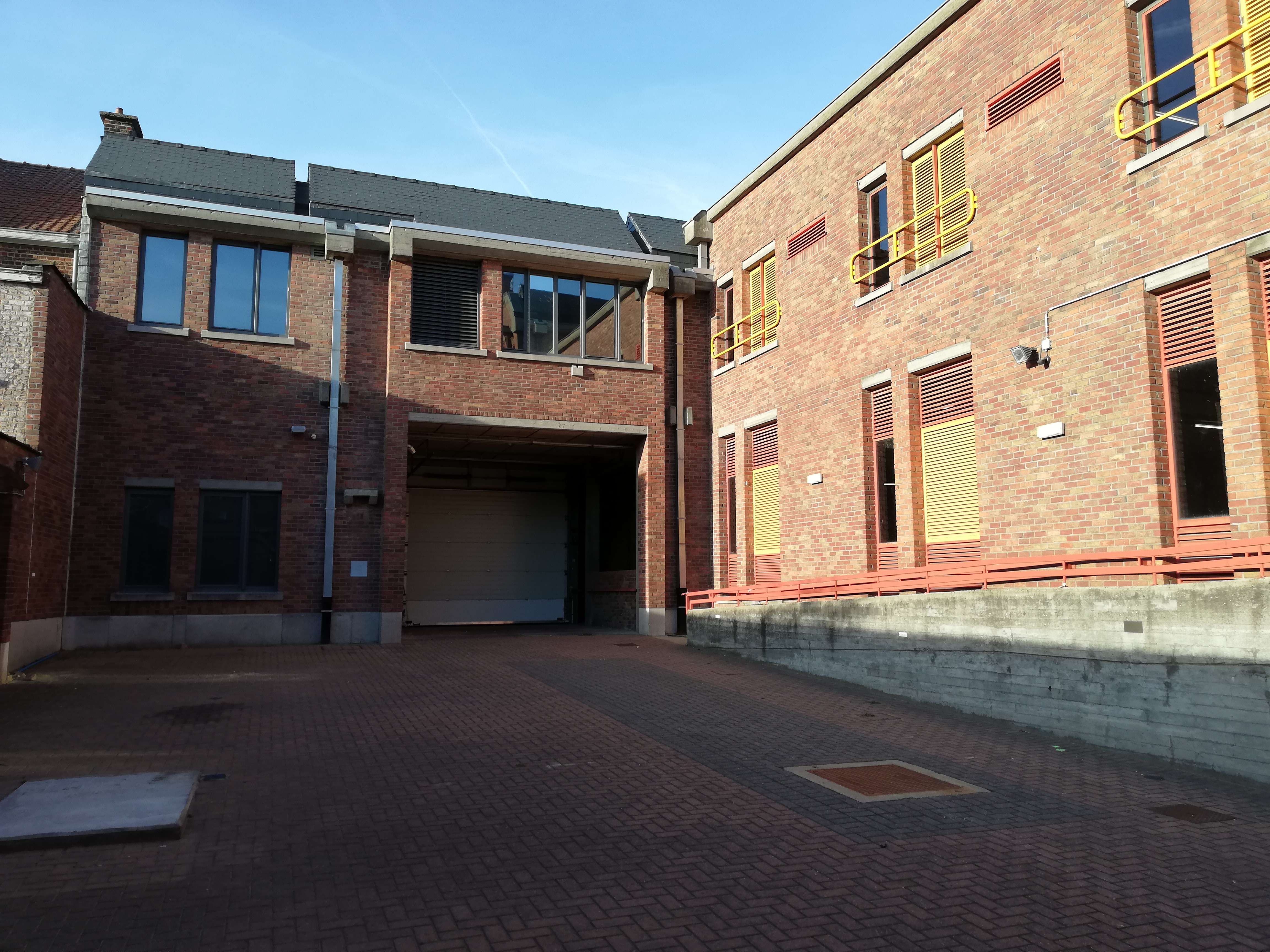
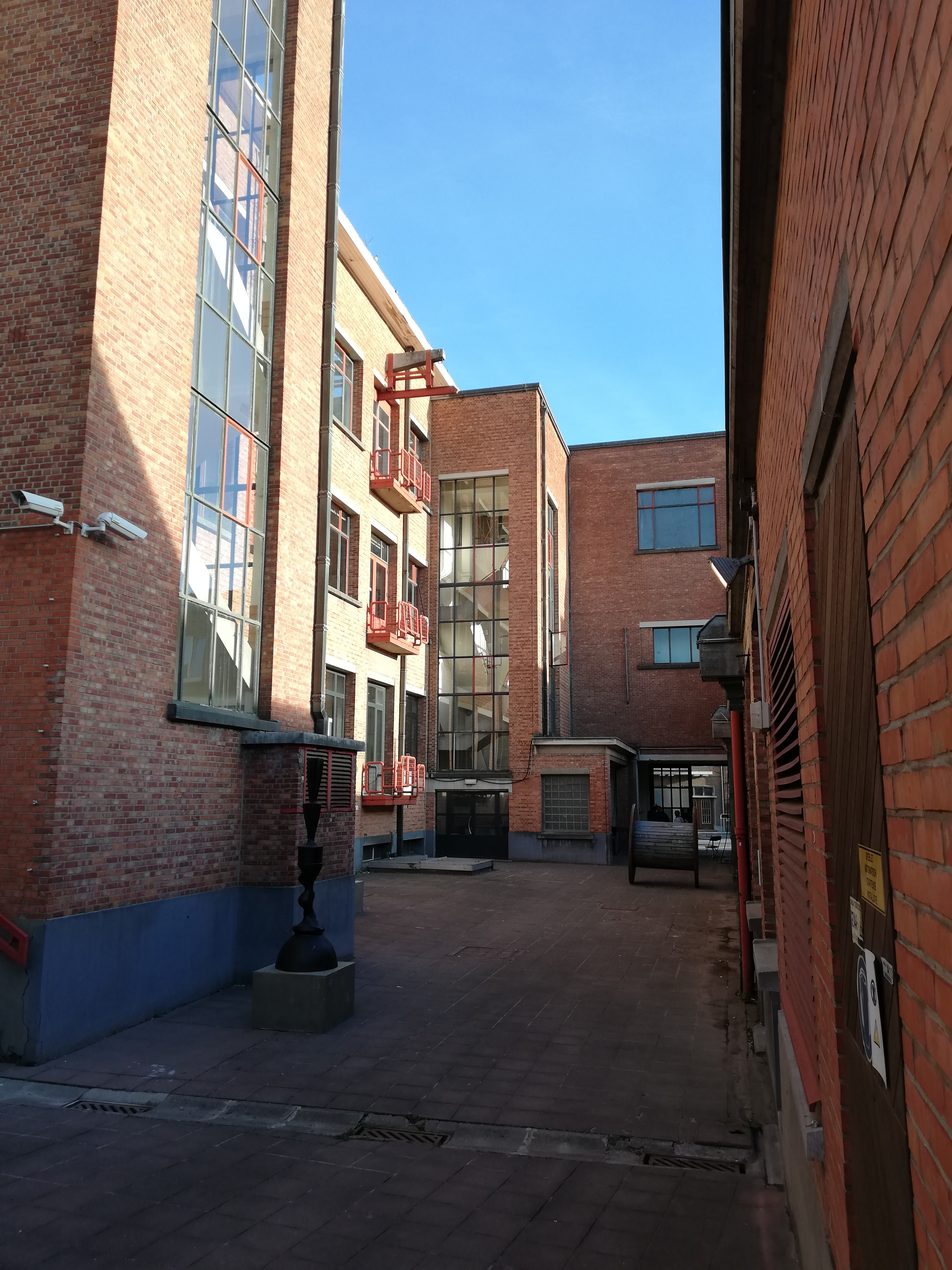
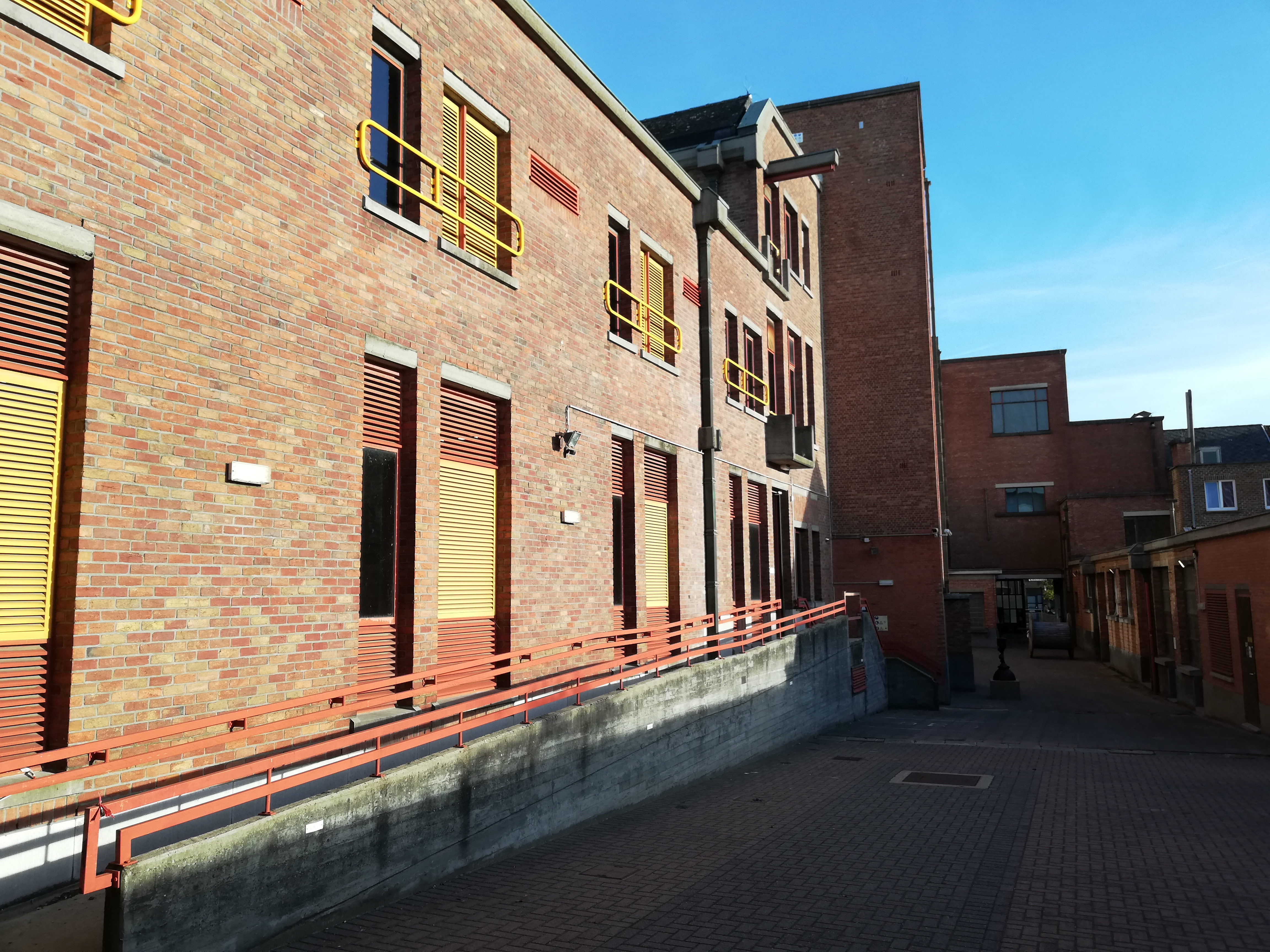
Photo of the RTT switchboard in Torhout. As it stands today. The upper floor was once the caretaker’s accommodation. Back in 1981/1982, during the rail strike, we had to report for duty there. At that time, there was still a caretaker and a 7A or 7D control centre. Now, apart from the switchboard, it’s practically empty. (But since I retired, I haven’t been able to get in there, have I?).
The graffiti (art) on the wall is fairly recent (a few years old). Previously, a tax office building stood next to it; it had been standing empty for a long time and has since been bought by the city and demolished.
Demolished to make way for flats
https://www.hln.be/roeselare/appartementen-verdringen-monumenten~ad0df312/?slug_rd=1
This was also the headquarters of the Telegraph and Radio Communications Service (abbreviated to BCR), which handled communications with overseas countries, including, at the very least, the Congo/Zaire. Connections were also established with ships at sea (via Oostende Radio).
Jette - In 1958, a second building housing the subscriptions and revenue (recettes) department was constructed as an extension of the distribution center on Jettelaan; access was via a small alley. Later, a building was added on the Jetsesteenweg side, which became the main entrance and provided parking for service vehicles. That building would house a telecom store, a mess hall, a small 10C central office, Mob 1-2, and later Proximus GSM, etc.
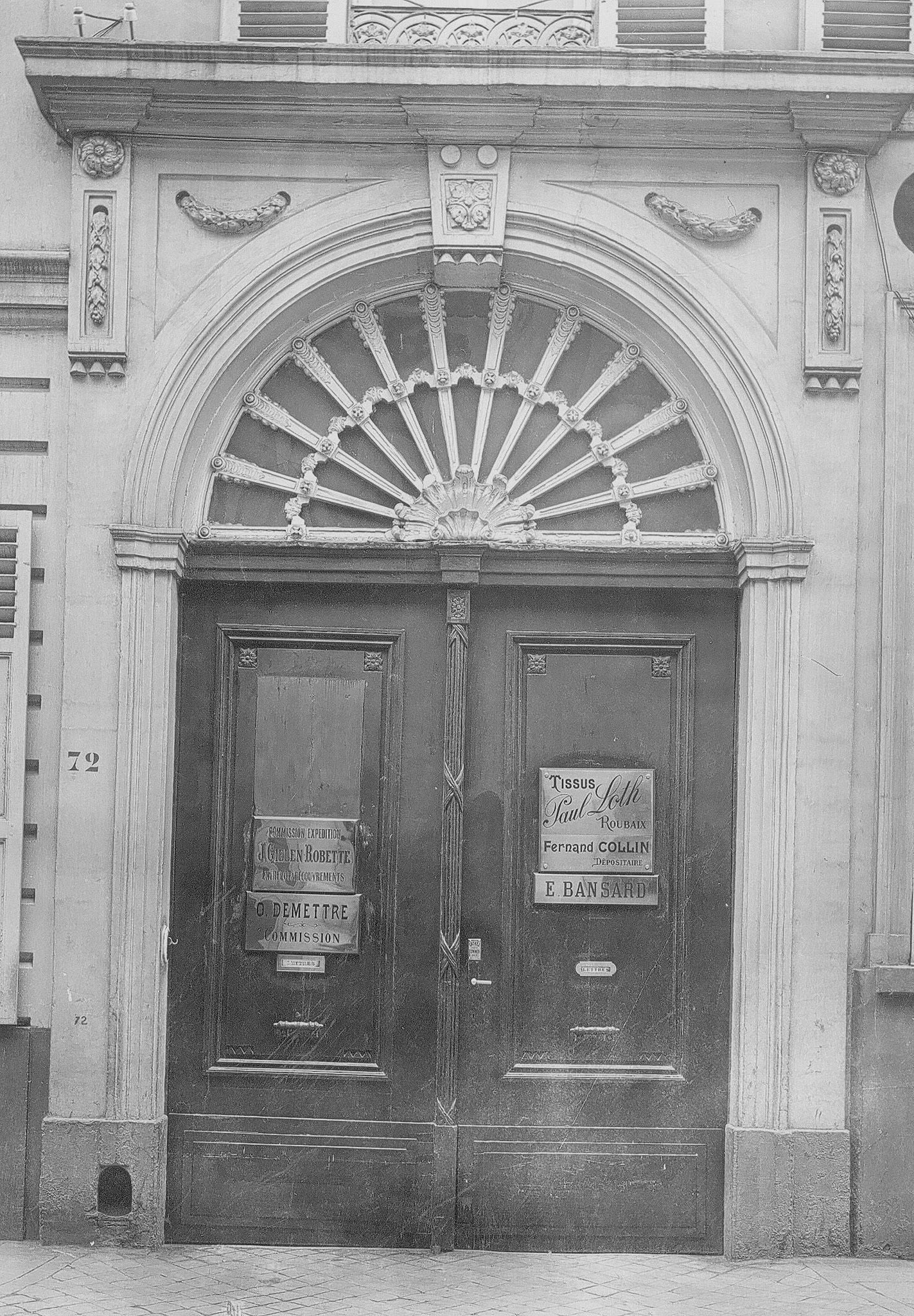
In the past, the old Broek/Marais building stood behind a private residence; you would go through this gateway at number 72 Broekstraat to reach the rear building, and cars would also drive underneath it (note: the photo is from 1905, when there was not yet a rear building).
If it's still there, you had to enter through the parking lot of the old ING branch (Rue du Tabelion). The LDC was (is?) at the very back of the parking lot on the left.
Building is being sold
89NEE0, Kanaalstraat in Neeroeteren, my home base. From Ewsd, you could see my grandparents’ house. As a child, I watched the Lex being built; when I was 9, I’d see all the lights flashing at night from my bedroom and say, “I want to go inside there someday.” Ten years later, I was working there.
in de nieuwe centrale in Berendrecht .... een 10 C centrale hadden ze 1500 overgezet in 't jaar 1972 voor die 4 dorpen .... daarna kwam de uitbreiding van de haven en in 1978 hadden we In the new exchange at Berendrecht — a 10C exchange — they had transferred 1500 lines in 1972 for those 4 villages. Then came the expansion of the port, and by 1978 we had 2800 lines. Between 1975 and 1993 there was an explosion of telephone connections + the factories along the docks, and I left when there were more than 7000 lines connected... in '93.
The 10C exchange was one of the most modern at the time (according to my information, the first one was put into trial operation in Limburg – Hasselt and in Hoboken (near Antwerp)). The Berendrecht 10C exchange is the 2nd largest exchange in the port... From Lillo brug all the way to the border, with the firms connected to it: BASF – Monsanto – G+H Montage – various "naties" (Antwerp port stevedoring/cargo-handling companies): Noord Natie – Katoen Natie – Hessenatie, Van Wellen – Aertssen... too many large firms to name them all, as well as the locks (the Berendrechtsluis and the Zandvlietsluis were then the largest in the entire world), the bridges, shipping (RMD – Maritime Radio Service), and the four villages... everything went through that exchange in our "backwater" (boerengat).
Being able to work in that exchange was an honour for me, alongside an automation technician, being allowed to operate it. It was not a "quick back home" or "quick to the bar counter" system, but a race against the clock to keep the lines operational. 99% of faults were fixed within half an hour (often received calls – including in the middle of the night – I lived only 500 metres from the exchange). I was fortunate that the section chief taught me the entire 10C exchange, right down to decoding the exchange in binary... 000 010 110... I was mostly there alone, and I also learned to maintain the cooling units – diesel – the battery room – the cross-connect (MDF) – the junctions – the PABXs... in fact everything, and I found it very pleasant to be able to do such varied work there, and I learned a great deal from it.2800 lijnen . tussen 1975 en 1993 is er een explosie geweest van telefoonaansluitingen + de fabrieken aan de dokken en ben er toen weggegaan dat er +7000 lijnen waren aangesloten .... in 93 .
De 10c centrale was in die tijd één van de modernste ( volgens inlichtingen werd de éérste op proef gedraaid in de Limburg - Hasselt en in Hoboken ( tegen Antwerpen ) De 10 c centrale in Berendrecht is de 2e grootste centrale in de haven ... Vanaf Lillo brug tot aan de grens , de firma's die erop waren aangesloten ; BASF -Monsanto - G+H montage - verschillende naties: Noord Natie - Katoen natie- Hessennatie Van Wellen - Aertssen ..... teveel om al die grote firma's op te noemen, ook de sluizen ( de Berendrecht en de Zandvlietsluis waren toen de grootste van heel de wereld ) en bruggen en de scheepvaart (RMD - Radio maritieme dienst ) en de vier dorpen .... alles ging over die centrale in ons " boerengat "
Daar in deze centrale te mogen werken was voor mij een eer samen met een automatieker, deze te mogen bedienen , dat was niet van " rap terug thuis of rap tegen den toog " systeem maar knokken tegen de tijd om de lijnen in werking te kunnen houden. 99% van de storingen waren binnen 't half uur terug in orde ( dikwijls oproepen gehad - ook midden in de nacht - 'k woonde maar 500 meters van de centrale en heb geluk gehad dat de sectiechef mij de hele 10 c centrale heeft aangeleerd tot zelfs de décodéring van de centrale in binairstelsel ... 000 010 110 ..... - ik was daar merendeels alleen en leerde ook de koelgroepen - diesel -batterijzaal - cross - juncties - Pabx - te onderhouden .... in feite alles en vond het zeer fijn daar afwisselend werk te mogen kunnen doen en veel van geleerd )
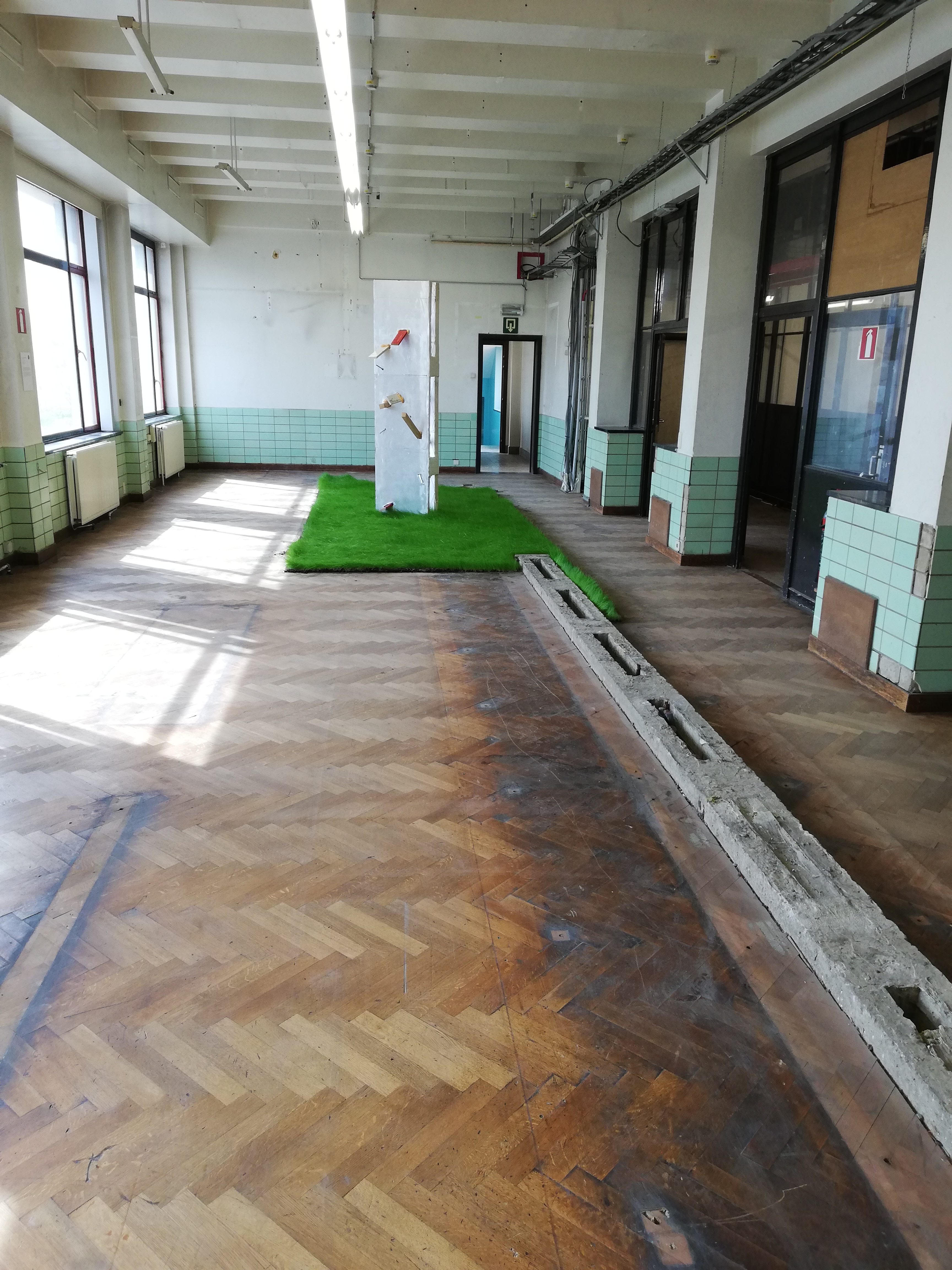
It has since been demolished; two years before its demolition, an art exhibition was held there.
I worked there a long time ago—around the 1980s—in the welders' emergency repair service
as an installer.
There was also a telegraph office there at the time with four phone booths.
Both LDCs 299 and 297 are located in the station’s large underground parking garage, but on different levels.
There was even a third one located just past a service entrance to the station (if I recall correctly, a double door and immediately to the right) that had been completely removed from the records, but where a lot of equipment (racks and a switch) was still inside.
Working at the “Regie” fostered a strong bond through technical collaboration. For example, all RTT technicians and engineers came together from all corners of Belgium to keep the 54GER site operational.
For your information:
The RTT cell towers at most RTT telephone exchanges across Belgium were designed in the 1980s by Robby Mast, Ir.
The "89GEN" telephone exchange was first upgraded from an analog to a semi-digital system in the 1980s.
It was the GTD-5 EAX exchange, and it was impressive to see how quickly the technology of that time was evolving.
De 48V volt van het gebouw werd in Juni 2025 afgeschakeld.
De volledige ontmanteling volgde nadien.
De ge-ïnterseerden zouden er een koffiebraderij in onder brengen
Original text, not translated (NL)
De 48V volt van het gebouw werd in maart 2026 afgeschakeld.
De volledige ontmanteling volgt in de komende maanden
Original text, not translated (NL)
De 48V volt van het gebouw werd in Juni 2025 afgeschakeld.
De volledige ontmanteling volgde nadien
Original text, not translated (NL)
De 48V volt van het gebouw werd in mei 2025 afgeschakeld.
De volledige ontmanteling volgde nadien
Original text, not translated (NL)
Dit gebouw staat te koop, zal verlaten worden in 2027
Original text, not translated (NL)
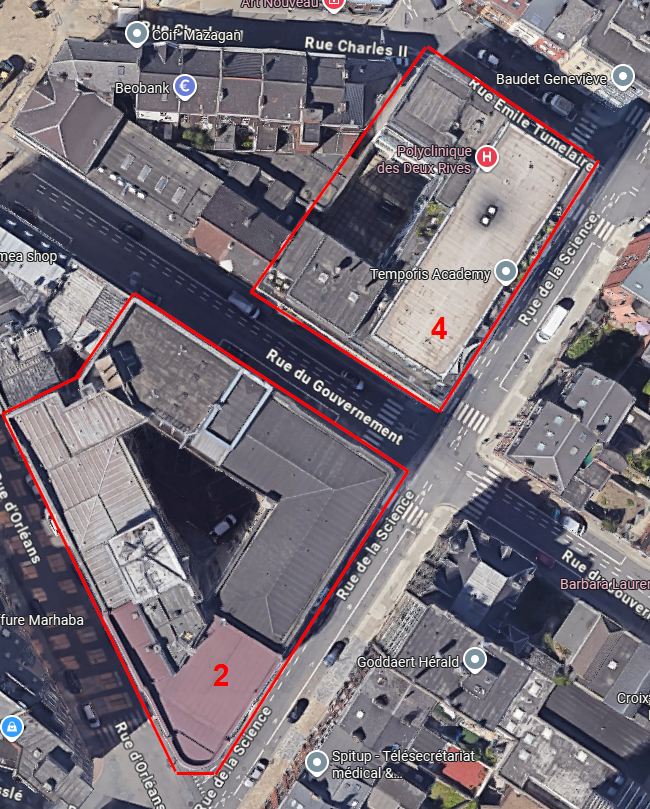
This refers to the building located at 2 Rue de la Science, since RTT_BGC_PXS also owned a large building at 4 Rue de la Science, separated by Rue du Gouvernement.
An underground passage runs beneath this street and connects the two sites.
The building at No. 4 was sold in ??? and has been converted into apartments (access to the underground passage has been closed).